
Rising Construction Costs for Residential Houses in Nigeria (2025–2026)
Rising Construction Costs for Residential Houses in Nigeria (2025–2026)
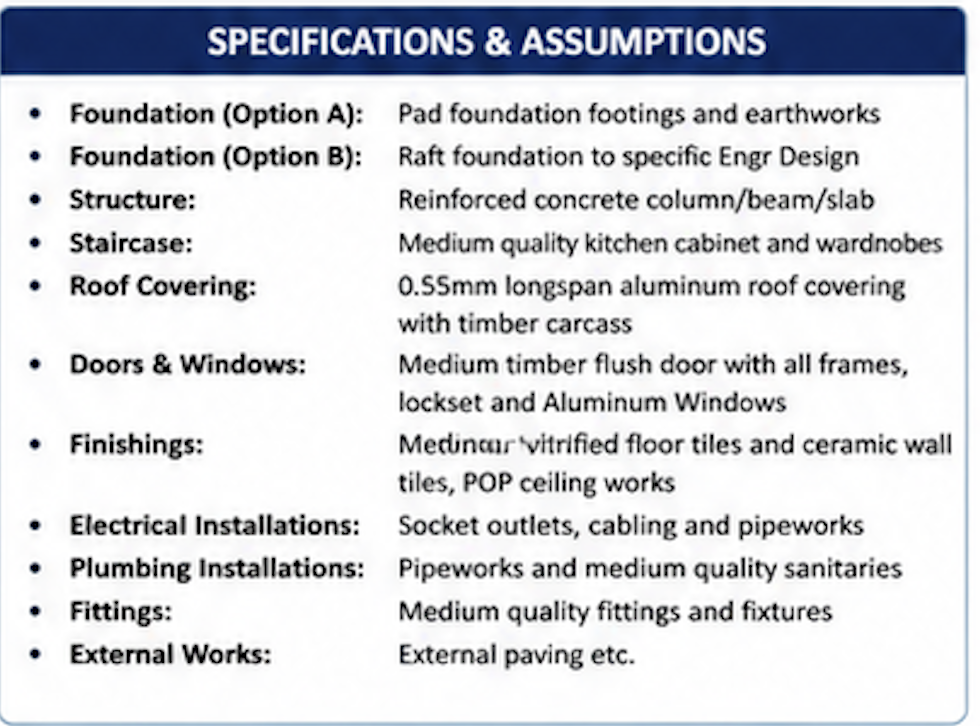
The cost of constructing residential buildings in Nigeria has risen sharply between January 2025 and April 2026, reflecting broader economic pressures, inflation in building materials, and increased labor expenses. A recent cost analysis of the Model Castles Lifestyle four-bedroom detached house (see specifications in box below) highlights the scale and drivers of this upward trend.
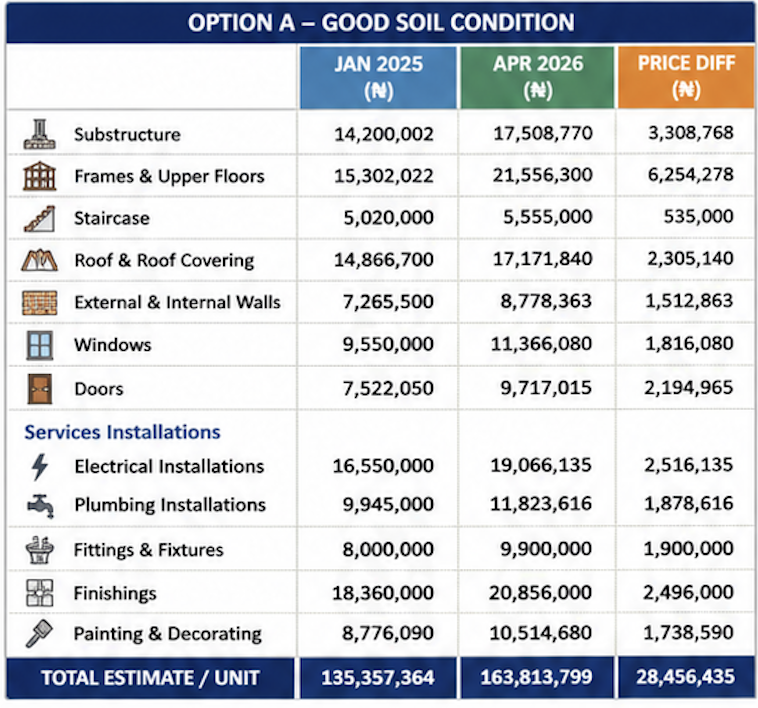
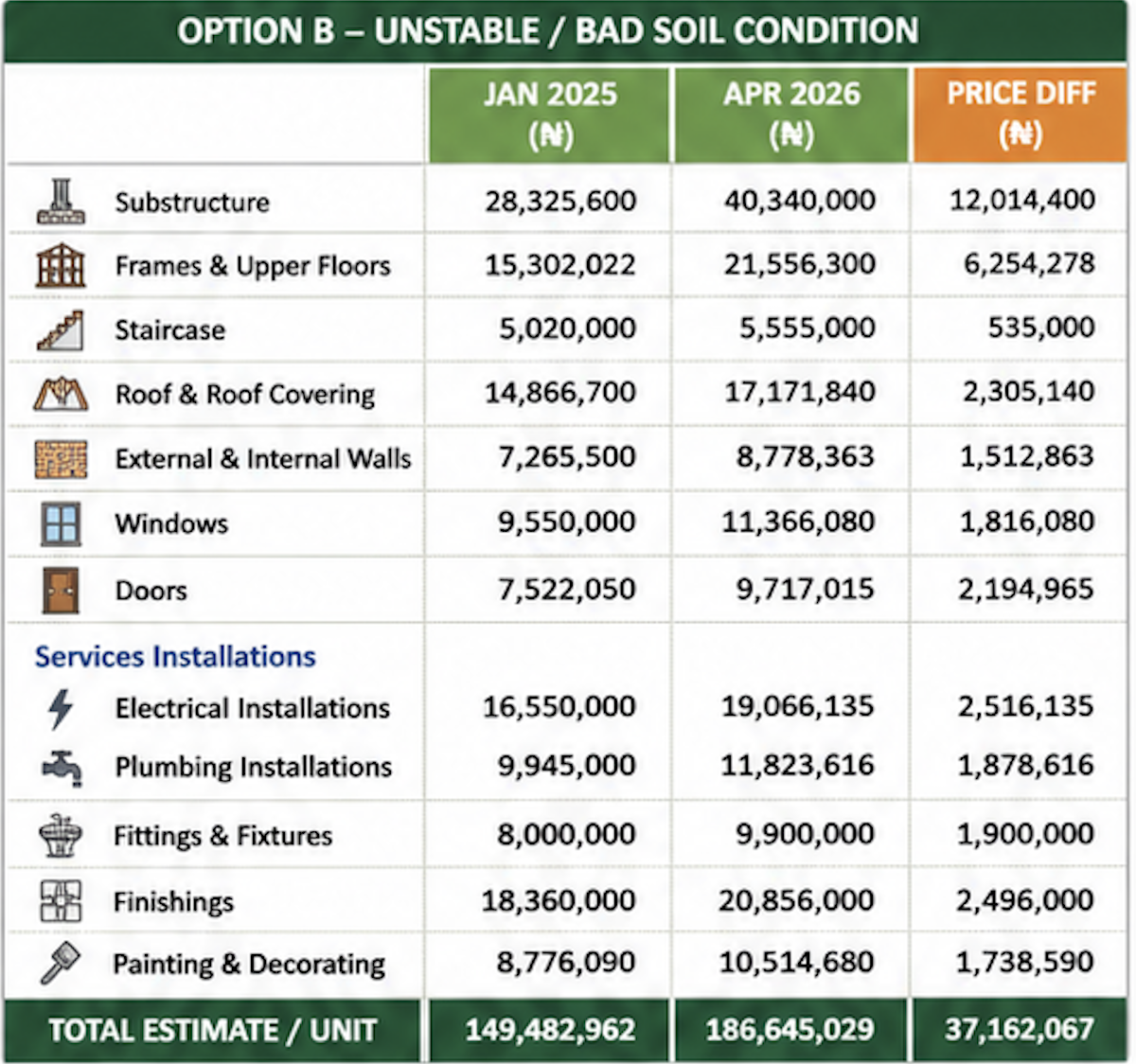
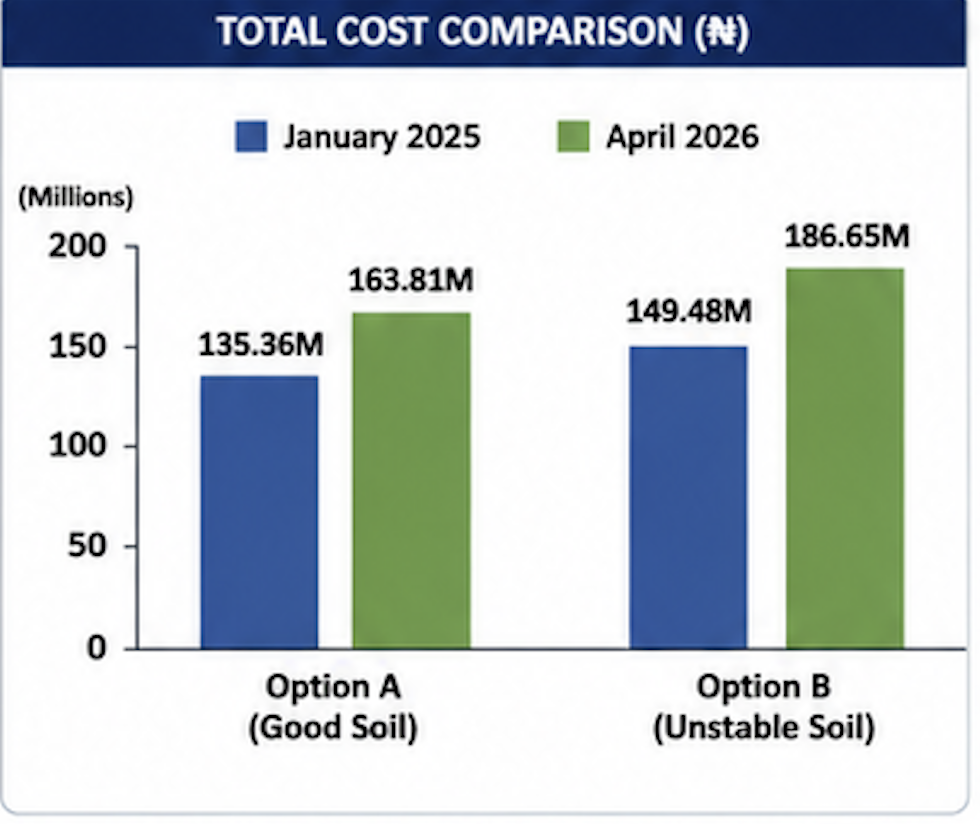
Two construction scenarios—Option A (good soil conditions) and Option B (unstable soil conditions)—demonstrate how both environmental factors and market conditions influence total project costs. Under Option A, the total estimated cost increased from ₦135.36 million in January 2025 to ₦163.81 million by April 2026, representing a rise of about ₦28.46 million. In contrast, Option B shows an even steeper increase due to more complex foundation requirements, with costs rising from ₦149.48 million to ₦186.65 million, a difference of ₦37.16 million over the same period.
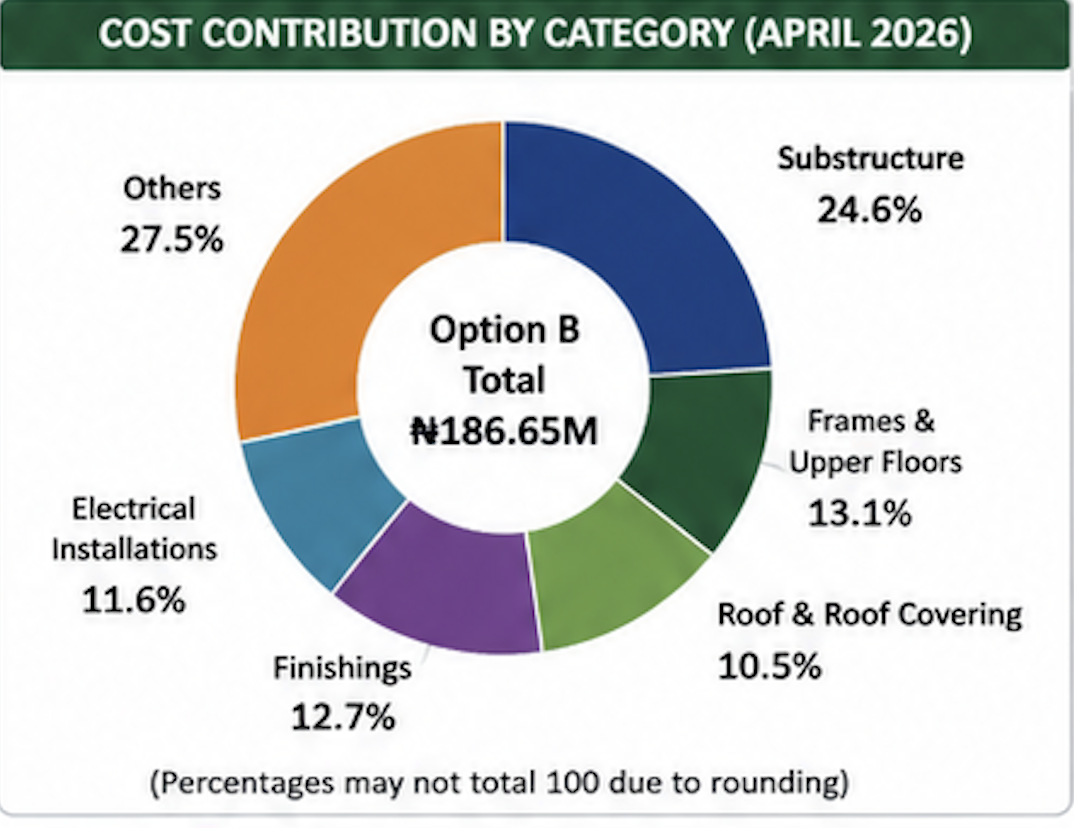
One of the most significant contributors to this increase is the substructure cost, especially in areas with poor soil conditions. For instance, in Option B, substructure costs rose dramatically from ₦28.33 million to ₦40.34 million—an increase of over ₦12 million. This reflects the need for more expensive foundation systems such as raft foundations and additional earthworks in unstable terrains.
Structural elements such as frames and upper floors also saw notable increases. Costs climbed from ₦15.30 million to ₦21.56 million across both options, indicating the rising price of reinforced concrete and associated materials. Similarly, roofing costs increased by over ₦2.3 million, driven largely by higher prices of aluminum roofing sheets and timber components.
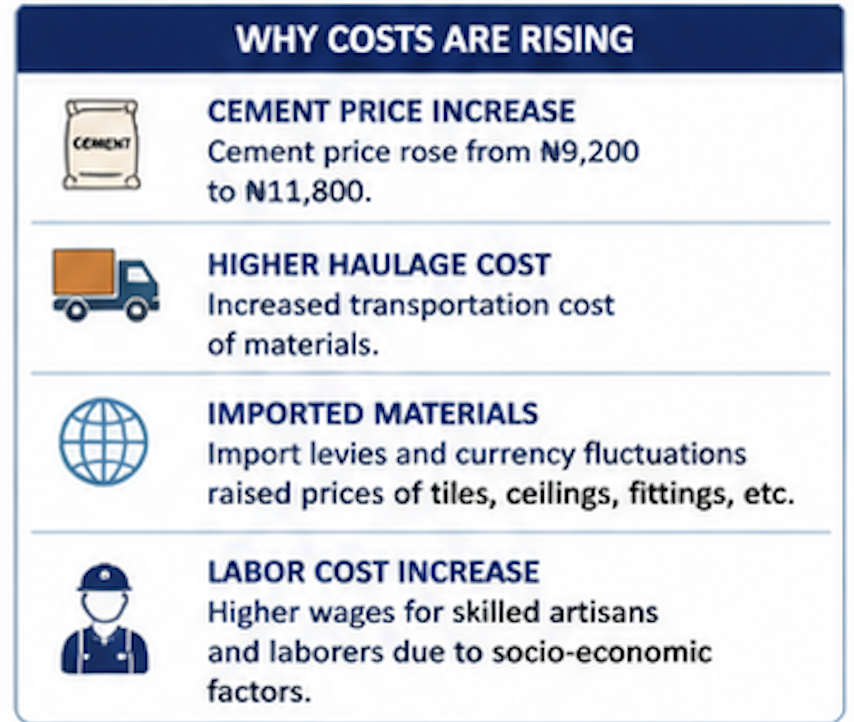
Finishing components, which often rely on imported materials, have also contributed significantly to the cost surge. Windows, doors, and finishing works collectively recorded increases exceeding ₦6 million in Option A. Imported materials such as tiles, ceiling boards, and fittings have become more expensive due to government import policies and currency fluctuations.
Mechanical and electrical installations are another major cost driver. Electrical installation costs rose from ₦16.55 million to ₦19.07 million, while plumbing increased from ₦9.95 million to ₦11.82 million. These increases reflect both material costs and higher wages for skilled artisans, whose rates have been impacted by broader socio-economic conditions.
The data also reveals that labor costs are playing a growing role in overall construction expenses. Skilled laborers, including masons, carpenters, and electricians, are commanding higher wages due to inflation and economic pressures. This trend has compounded the effects of rising material costs, making construction projects significantly more expensive to execute.
A key underlying factor behind these cost increases is the sharp rise in the price of cement, which moved from approximately ₦9,200 to ₦11,800 within the period under review. Cement is a fundamental component in nearly all stages of construction, from foundations to structural frameworks, and its price fluctuations have a ripple effect across the entire building process. Additionally, increased haulage and transportation costs have further inflated material prices nationwide.
In conclusion, the cost of building residential houses in Nigeria has experienced substantial growth between 2025 and 2026, driven by material price inflation, labor cost increases, and economic policy changes. Going forward, should stakeholders expect higher costs or will costs moderate over the medium term?