Solar Panel Fires in Nigeria Are Rising — Here Are the NEMSA Safety Guidelines Every Homeowner Needs
Nigeria’s solar energy boom is creating a hidden fire crisis. The Federal Government has responded with mandatory guidelines that every installer and property owner must follow.
Nigeria’s Solar Rush and the Fire Crisis Nobody Warned You About
For millions of Nigerians, solar panels have become more than an energy alternative — they are a lifeline. With the national grid delivering fewer than four hours of electricity daily to many households, rooftop solar panel installations have surged across the country, from modest Lagos apartments to sprawling Abuja compounds.
But this solar revolution is carrying a dangerous shadow. Across Nigeria, a disturbing pattern of solar panel fire outbreaks linked to rooftop solar installations has been spreading as quietly as smoke through a ceiling. Videos circulating on social media have shown homes and businesses engulfed in flames, with poorly installed solar systems identified as the source.
In October 2025, energy experts warned that the approaching dry season — with its extreme heat and low humidity — could significantly worsen the solar panel fire risk in Nigeria, as overheating systems become more volatile under prolonged high temperatures.
Why Solar Panel Fires Are Happening in Nigeria
The fires are not happening by accident. They are the predictable consequence of a boom that has outpaced both regulation and expertise. The root causes include:
- Unqualified technicians operating freely across the market
- Installation using substandard cables and damaged panels
- No earthing or grounding of electrical systems
- Inverters installed in enclosed spaces without ventilation
- Lithium batteries stored in living areas and kitchens, near children and family members
- Buyers prioritising cost over safety, unknowingly inviting disaster into their homes
This combination of factors has turned Nigeria’s solar energy solution into a significant safety hazard — one that the Federal Government can no longer ignore.
NEMSA Issues Mandatory Solar Installation Safety Guidelines
The Federal Government, through the Nigerian Electricity Management Services Agency (NEMSA), has moved to confront this crisis directly. In April 2026, the Chief Electrical Inspector of the Federation issued a strongly worded public notice, acknowledging what many Nigerians have long experienced firsthand.
“NEMSA has observed with serious safety concern the increasing number of fire incidents allegedly linked to improperly installed rooftop solar photovoltaic systems across the country,” the notice stated, adding that the adoption of renewable energy must never come at the cost of human safety.
The guidelines are issued pursuant to Section 176(m) and Section 184(8) of the Electricity Act 2023.
NEMSA Solar Installation Safety Guidelines: What You Must Know
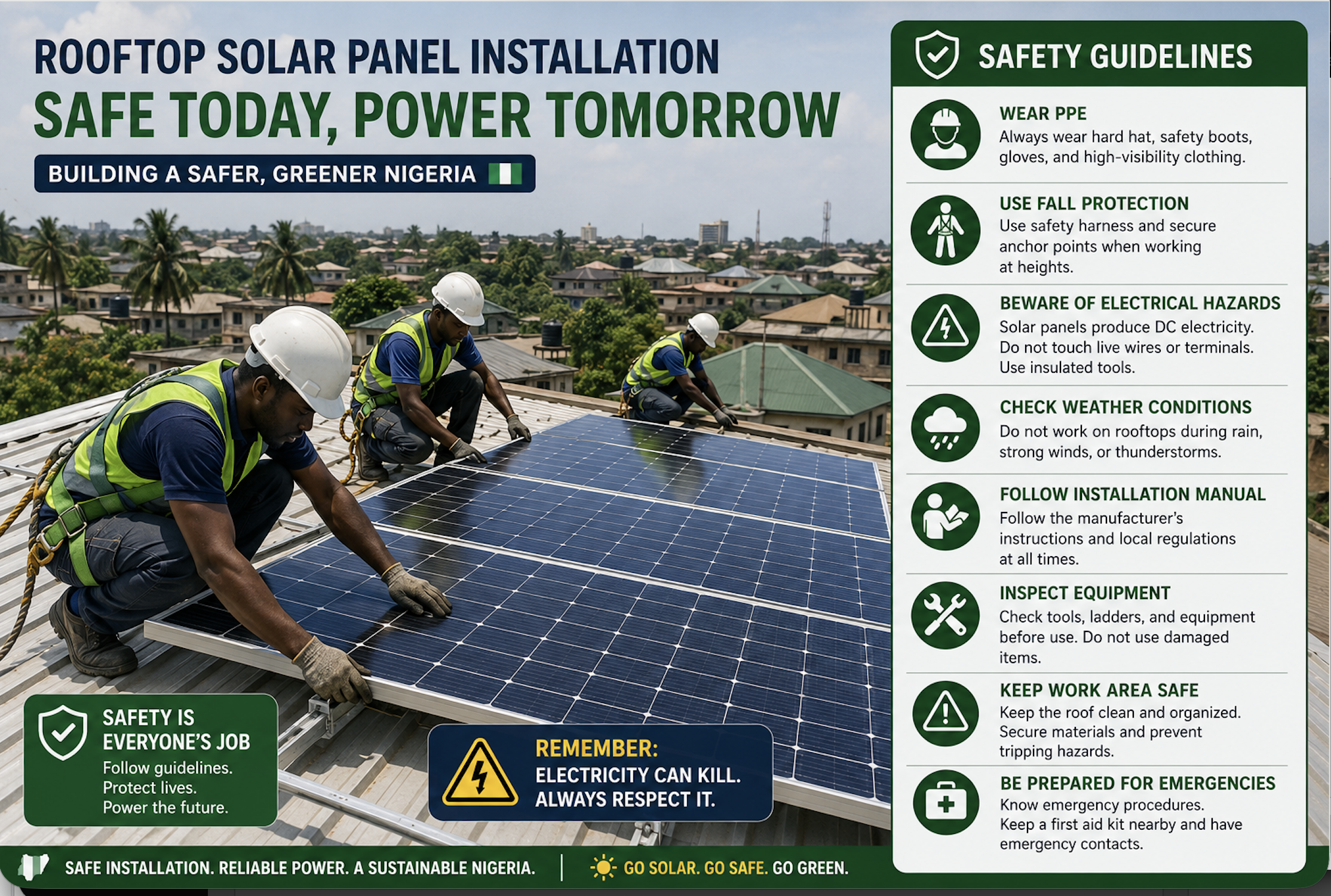
1. Only Use NEMSA-Certified Solar Installers
All solar PV installations must be carried out exclusively by NEMSA-certified electrical contractors. Certified professionals must carry valid competency certificates on-site during installation. This single requirement, if enforced, could eliminate the majority of unqualified operators currently working across Nigeria.
What to do: Before hiring any solar installer, ask to see their NEMSA certification. Verify it is current and valid.
2. Conduct a Structural Roof Assessment Before Installation
A structural assessment of the roof must be completed before any installation begins. Weak roofs cannot safely support the weight of solar panels, creating collapse and fire risks.
3. Maintain the Correct Panel Clearance for Ventilation
Panels must maintain a minimum clearance of 13 centimetres (0.13m) from the roofing surface. This gap allows for adequate airflow and prevents the overheating that has been directly linked to numerous rooftop solar fires in Nigeria.
Insufficient clearance leads to overheating, reduced system performance, and potential fire.
4. Install Proper Electrical Safeguards
- DC and AC isolators must be installed to allow emergency shutdown
- Appropriately rated circuit breakers and fuses to prevent overloading
- Surge protection devices to guard against lightning — critical during Nigeria’s rainy season
- The entire system must be properly earthed, with resistance not exceeding 2 ohms
5. Store Batteries Safely — Especially Lithium Batteries
Battery safety is among the most urgent concerns in Nigeria’s solar fire incidents. NEMSA mandates:
- Batteries must be installed in a well-ventilated, secure location away from heat sources and living areas
- Lithium batteries require a dedicated battery management system (BMS)
- Lithium battery environments must be equipped with appropriate cooling or air-conditioning to maintain safe temperatures
6. Separate Power and Communication Cables
Power and communication cables must be routed through separate conduits and never run together. Combining them causes signal interference, degraded system performance, and significantly increases the risk of electrical faults and fire.
7. Perform Regular Maintenance
- Clean solar panels regularly to prevent dust accumulation and overheating
- Periodically inspect cables, connectors, and the inverter
- Replace damaged components immediately
The Stakes for Nigeria’s Energy Future
NEMSA’s intervention arrives at a critical moment. Nigeria’s energy transition goals depend on public confidence in solar technology — and that confidence is being eroded every time a rooftop fire makes the news.
Solar energy is not the problem. Unregulated, unsafe installation is.
The guidelines cannot work without enforcement, and enforcement cannot work without public awareness. Nigerians embraced solar energy to escape one energy crisis. They must not be left to navigate another one alone.
Frequently Asked Questions About Solar Panel Safety in Nigeria
What is causing solar panel fires in Nigeria? Most solar panel fires in Nigeria are caused by poor workmanship, use of substandard materials, lack of earthing, improper battery storage, and inadequate ventilation around panels and inverters.
What are the NEMSA solar installation guidelines? NEMSA’s April 2026 guidelines require NEMSA-certified installers, structural roof assessments, minimum 13cm panel clearance, proper earthing at 2 ohms or below, battery management systems for lithium batteries, and separate routing of power and communication cables.
How do I find a NEMSA-certified solar installer in Nigeria? Contact NEMSA directly or request a valid competency certificate from any installer before work begins. Do not hire any technician who cannot produce current NEMSA certification.
Are solar panels safe for homes in Nigeria? Yes — when properly installed by certified professionals following NEMSA’s safety standards. The danger lies in substandard installation, not in solar technology itself.