The Green Line and Its Transformative Impact on Lagos Real Estate
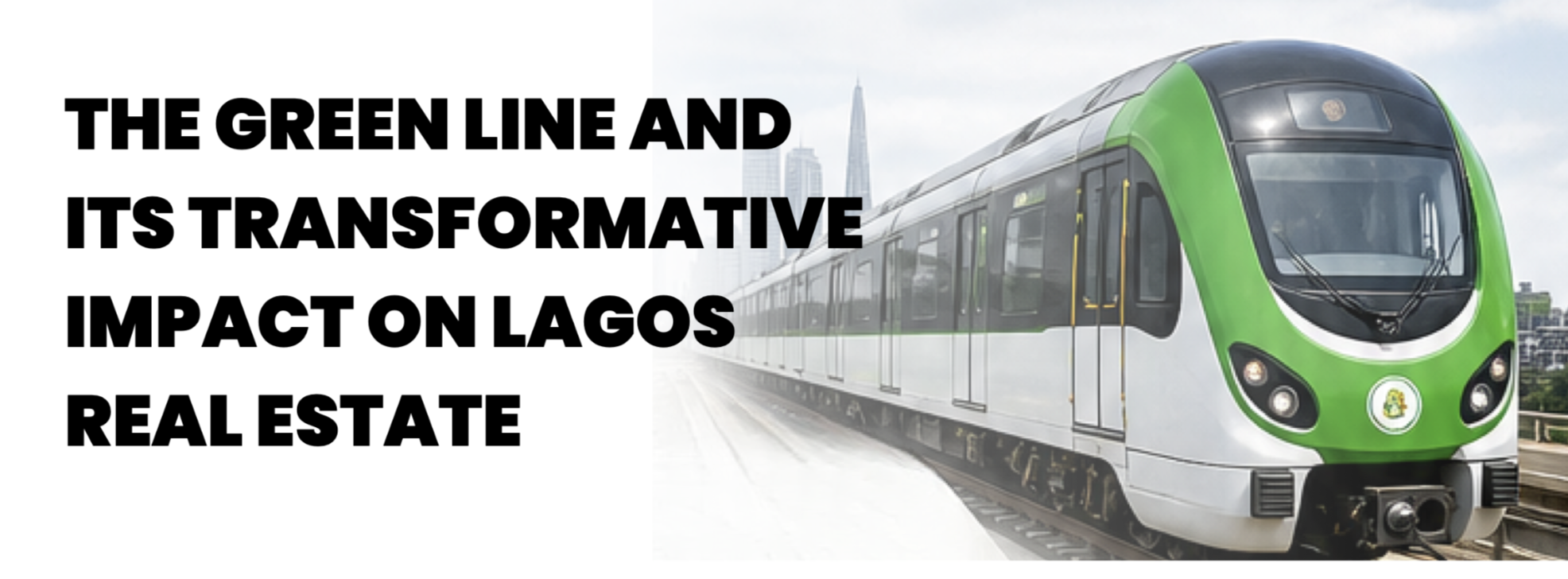
The Green Line and Its Transformative Impact on Lagos Real EstateLagos has long been defined by its dynamism—and its congestion. For decades, the city’s real estate market has evolved around road networks, often constrained by the notorious traffic bottlenecks that shape where people live, work, and invest. The emergence of the Green Line rail project marks a pivotal shift, one that could redefine property values and urban growth patterns across the Lekki–Epe corridor.
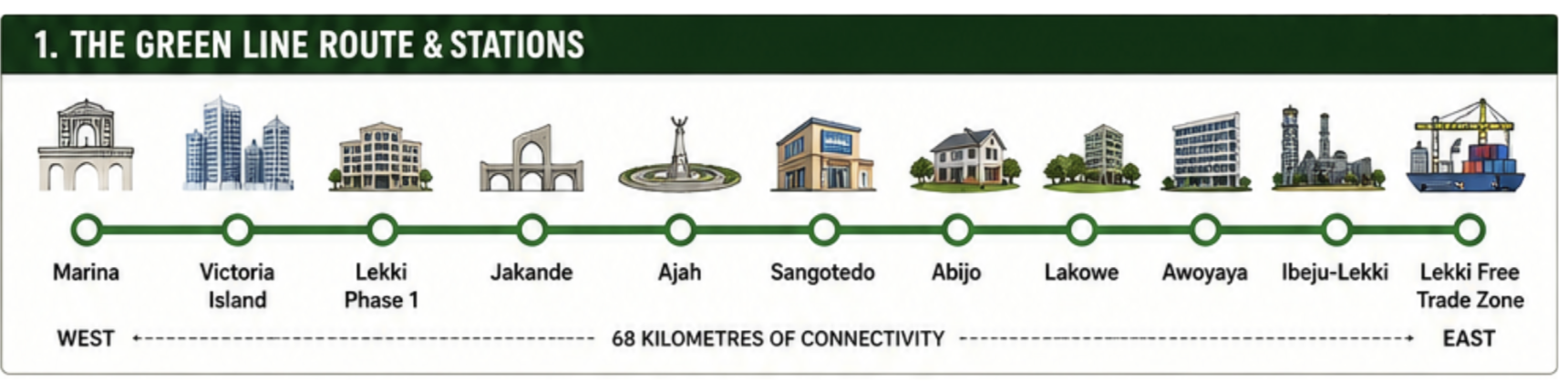
The Green Line is a proposed 68-kilometre urban rail system stretching from Marina to the Lekki Free Trade Zone, linking key districts such as Victoria Island, Lekki, and Ajah. Lagos Metropolitan Area Transport Authority oversees the project as part of a broader rail expansion strategy. With approximately 17 stations and an initial capacity of up to 500,000 passengers daily, the line is designed to dramatically improve mobility across Lagos’ fast-growing eastern corridor.
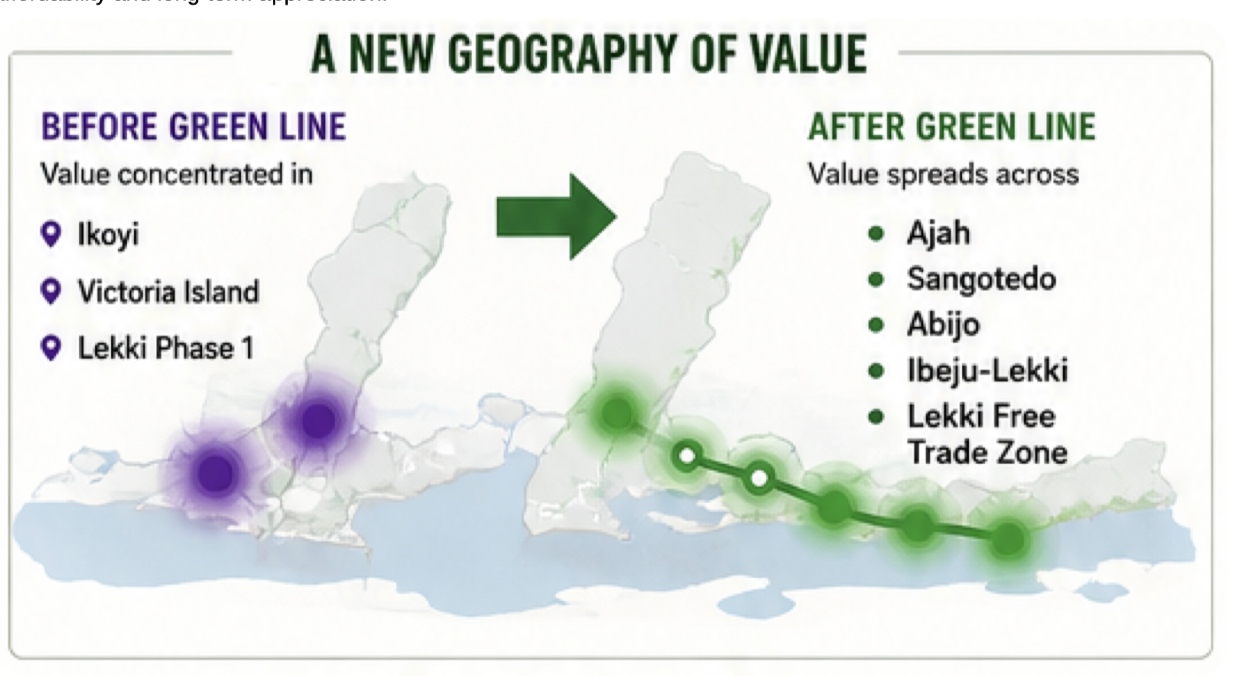
A New Geography of Value
Historically, Lagos real estate has been heavily influenced by proximity to employment hubs and accessibility via major roads. The Green Line challenges this paradigm by introducing reliable, high-capacity transit that can cut travel times significantly—potentially reducing journeys from hours to under 30 minutes.
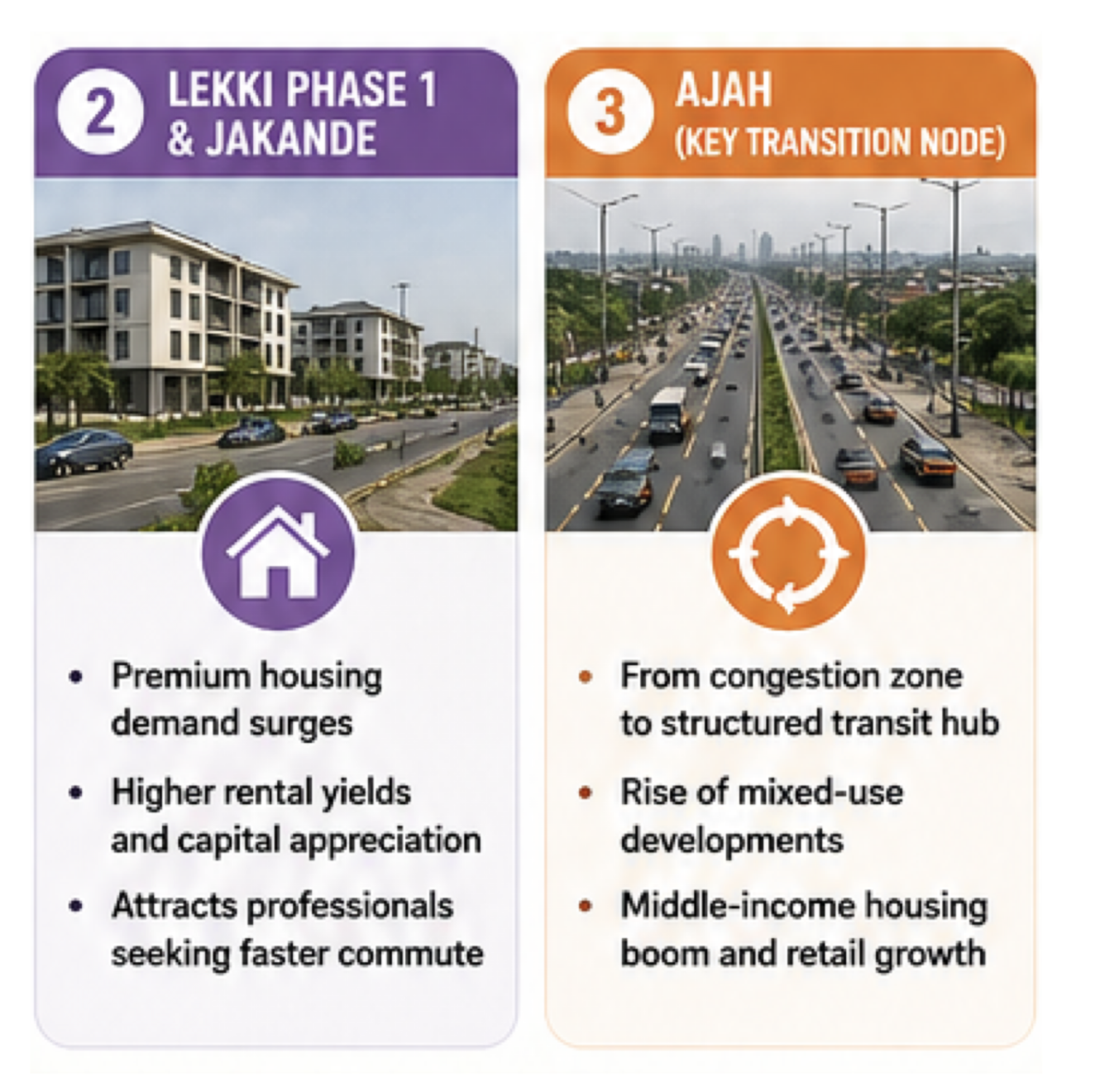
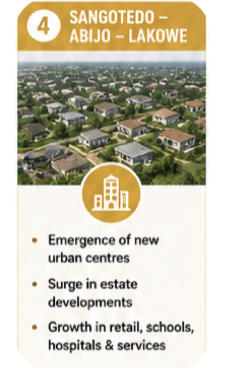
This shift will likely decentralize demand. Areas once considered peripheral—such as Sangotedo, Lakowe, and Ibeju-Lekki—are poised to become viable residential and commercial nodes. As accessibility improves, these locations will attract middle- and upper-income residents seeking affordability without sacrificing connectivity.
The concept of “transit-oriented development” (TOD) is particularly relevant here. Around each station, we can expect increased density, mixed-use developments, and a surge in retail and hospitality investments. Early evidence from the Blue Line corridor shows that proximity to rail stations tends to boost both rental yields and capital appreciation, a trend that will likely replicate—and potentially amplify—along the Green Line.
Lekki Corridor: From Growth to Acceleration
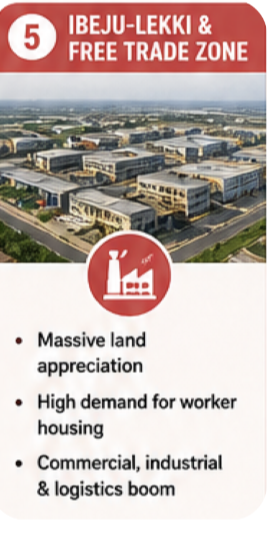
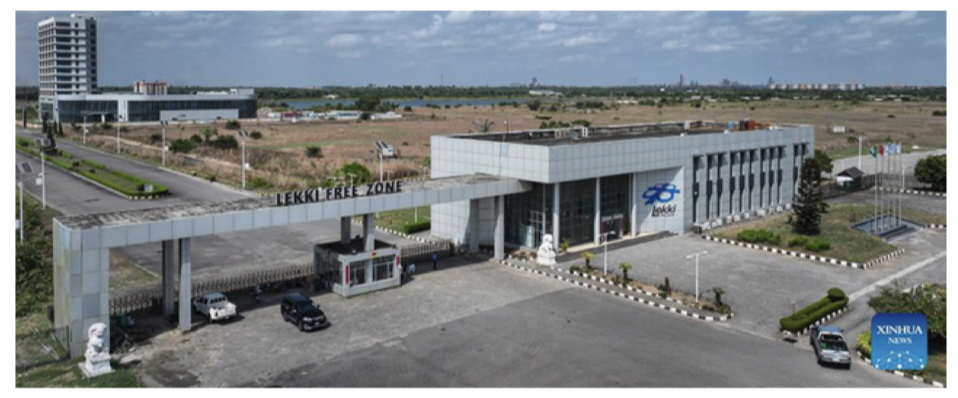
The Lekki–Epe axis is already one of Lagos’ most active real estate frontiers, driven by landmark projects such as the Lekki Free Trade Zone and Dangote Refinery. The Green Line adds a powerful new catalyst. By connecting these economic zones directly to Marina—the historic commercial heart of Lagos—the rail line effectively compresses distance and integrates previously fragmented markets.
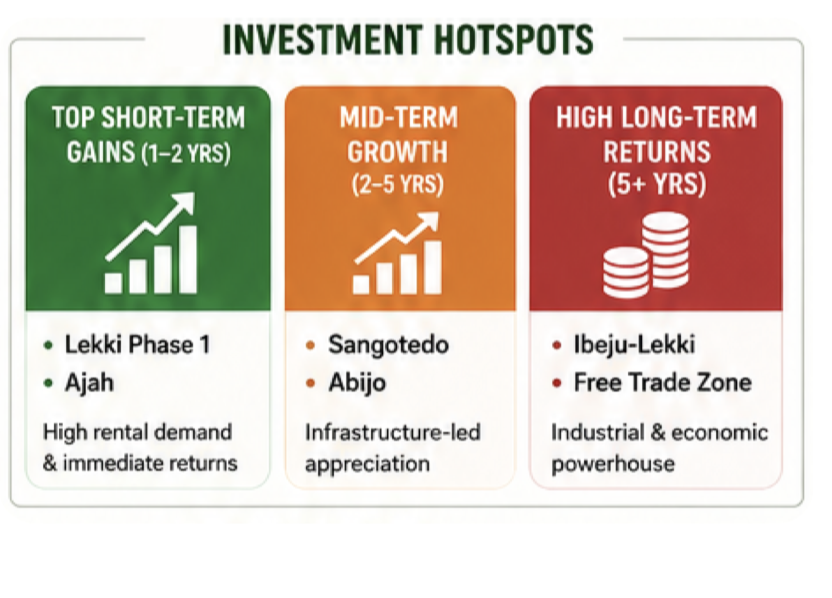
For developers, this means a re-rating of land values. Properties near planned stations, especially in Lekki Phase 1, Ajah, and Ibeju-Lekki, are expected to see accelerated appreciation. Investors who position early in these nodes stand to benefit from both infrastructure-led value growth and rising demand from professionals seeking efficient commuting options.
Commercial Real Estate and Investment Flows
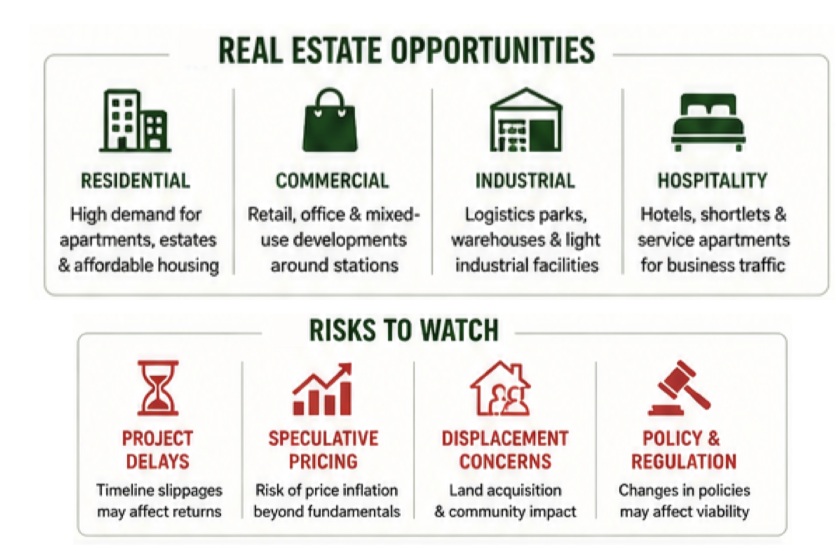
Beyond residential demand, the Green Line is set to reshape commercial real estate. Improved connectivity between Marina, Victoria Island, and the Lekki corridor will enhance business mobility, making it easier for firms to expand operations eastward.
Office developers may increasingly consider decentralised business districts along the corridor, reducing pressure on traditional hubs like Ikoyi and Victoria Island. Retail and mixed-use developments will likely cluster around transit stations, benefiting from high footfall and commuter traffic.
Moreover, the project’s scale—backed by multi-billion-dollar investment and federal approval—signals strong institutional confidence in Lagos infrastructure. This is expected to attract both local and foreign real estate capital, particularly into large-scale residential estates and commercial complexes aligned with the rail network.
Risks and Considerations
While the outlook is promising, the real estate market must temper optimism with realism. Infrastructure projects in Lagos have historically faced delays, and timelines for the Green Line—estimated at two to three years for initial phases—will be closely watched.
There are also concerns around displacement and land acquisition along the corridor, which could affect existing communities and create short-term market disruptions. Additionally, speculative buying may inflate prices prematurely, posing risks for investors entering at peak valuations.
Conclusion
The Green Line represents more than a transport project—it is a structural intervention in how Lagos grows. By unlocking new corridors of accessibility, it is set to redistribute real estate value, stimulate new development clusters, and deepen the integration of the city’s eastern axis.
For developers, investors, and homeowners, the message is clear: infrastructure is destiny. As the Green Line progresses from blueprint to reality, it will not only move people—it will move markets.